4 min read
Why risk mapping matters in healthcare hygiene
Identify higher-risk areas and adapt resources to the needs of each facility.
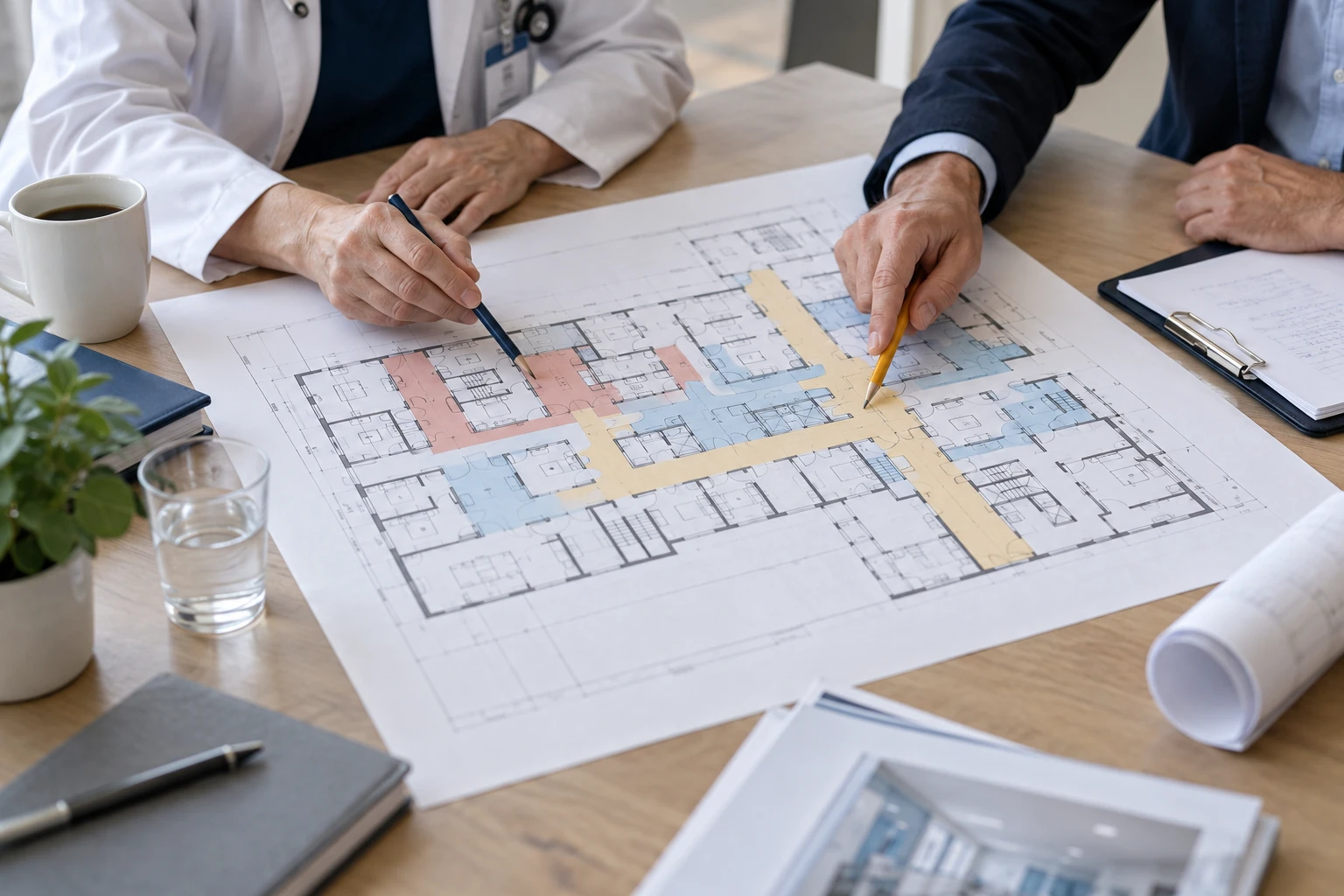
In healthcare facilities, cleanliness is not optional; it is a public health and regulatory requirement, and increasingly an ethical one. Yet,maintaining consistent hygiene across a complex healthcare site remains a daily challenge. Entre les chambres, les blocs, les sanitaires, les zones techniques, chaque espace comporte different risks.
That is whyrisk mapping for hygiene and cleaninghas become astrategic toolfor care home and hospital leaders, as well as service companies working in healthcare.
Identify risk areas: an often-overlooked first step
Risk mapping means identifying, categorising and prioritising areas according to theirlevel of hygiene riskThis analysis helps adapt methods, frequencies, products and checks to actual conditions on site.
Examples of risk categories:
| Area type | Risk level | Example |
| Very high-risk area | Critical | Operating theatres, sterilisation, infection isolation |
| High-risk area | High | Treatment rooms, patient rooms, dressing areas |
| Moderate-risk area | Moderate | Medical offices, corridors |
| Low-risk area | Low | Administrative offices, archives, logistics areas |
Each level calls fordifferent protocolsfor cleaning frequency, method (manual cleaning, steam, disinfection), quality checks and traceability.
“Without a map, organisations often apply one standard everywhere, even when it is unsuitable, ineffective or costly,” notes a healthcare hygiene consultant who uses My Synapse.
Mapping helps anticipate risk
A well-designed map helps to:
- Prioritise effortand resources
- Defineprotocols suited to each area
- Establish a basis forquality management and audits
- Providerobust evidenceduring inspections (public health authorities, SUVA or internal audits)
- Reduce the risk ofnon-conformities and healthcare-associated infections
How do you build a risk map?
Site visit and review of floor plans
- Identify functional areas and how they are used
- Account for flows of people, equipment and waste
Assess risk by area
- Using objective criteria: biological exposure, patient vulnerability and frequency of use
Coding and classification
- Use a risk scale (very high, high, moderate, low)
Define requirements
- Cleaning and disinfection methods
- Recommended products
- Equipment required
- Checks to plan
Include the findings in a structured hygiene plan
- Detailed cleaning plan for each area
- Intervention follow-up and auditability
Digital mapping with My Synapse
The softwareMy Synapsecan nowfully digitise hygiene risk mapping, from building the plan through to operational follow-up. With an intuitive interface and on-site support, the solution offers:
Custom area maps based on floor plans
Assign risk levels and protocols to each area
Real-time follow-up of services by risk level
Export compliance reports by area or building
Automatic detection of non-conformities
“A hygiene plan without a map is like treatment without a diagnosis,” says the founder of My Synapse. “Our tool makes risk management visible, traceable and manageable.”
Case study: targeted hygiene in a care home
At a care home in the canton of Vaud, a My Synapse audit found thatmore than 30% of cleaning time was spent in low-risk areas, at the expense of higher-risk rooms and critical bathrooms.
With adynamic remapping, the facility was able to:
- Reallocate resources
- Increase cleaning frequency where it mattered
- Improve compliance, efficiency and family confidence
Mapping as a management and evidence tool
Beyond day-to-day operations, mapping becomes:
- Asource of evidencefor quality audits or certifications
- Aa point in favour during tendersor contract renewals
- Aa training aidfor staff
- Aa pillar of internal communication(noticeboards in changing rooms, briefings, etc.)
A complete approach from My Synapse
My Synapse combinesaudits, on-site expertise and technologyto help healthcare facilities and cleaning companies build their hygiene risk maps.
Service offer:
- Full on-site risk mapping
- Review of current practices
- Hygiene and cleaning plans organised by risk level
- Digitisation in the My Synapse app
- Team training
- Quality follow-up over 3 to 12 months